
I enjoyed this collection.
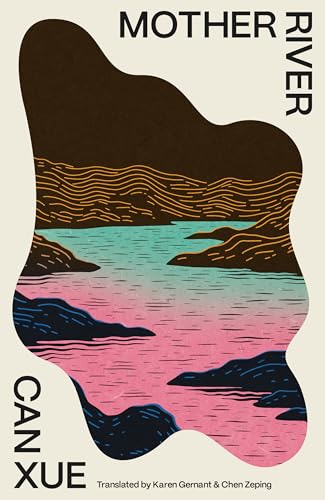
As I have enjoyed all of Can Xue’s story collections. This one reads a bit different from her others. More concerned with daily life is one way to describe it. The thirteen stories here feel of a piece. Almost like a novel spliced into stories. The Xishuangbanna in her stories and the recent novel The Enchanting Lives of Others must be based on where she lives, which is the remote mountain village called Xishuangbanna. The characters across the stories and various novels feel like recurring characters, under different names, and must be composite characters drawn from her life.
It is usually only conjecture to claim to know where writer’s draw their ideas. Can Xue’s ideas never cease to intrigue me.
The stories in this collection unfold in locales devoid of technology. The style remains primordial. Her sentences are casually subversive. They yield odd interpretations if you isolate them. As the words gather on the page into paragraphs, narrative forms. As usual, characters act and speak in unpredictable ways. Their speech is bereft of the tenets of modernity. They seem pulled from far back in history, telling of transcendent experiences buried within the mundane.
Mostly, the stories lack mawkish melodrama. Typically, the protagonist contemplates facets of their surroundings and contemplate elements of life, infusing the whole with mystery.
Beautiful observant moments punctuate the uneventful plots.
Subtle surrealism blurs the line between character’s claims at reality and what the reader expects from the run-down, earthy setting. Can Xue’s microcosms are always worthy of interpretation, analysis, commentary, and silent enjoyment. You cannot recommend her works to most people. They simply won’t get it.
She seems effective at implanting dream images. Her writing is possessed of uncanny wit and brazen allure for me. I must recalibrate before transitioning between her work and that of another author. Her exotic mindset challenges my default mental code.
For instance, “Something to Do with Poetry,” a strange golden peacock appears. I couldn’t get that out of my head. Why is it in the story? Because the story would not be a Can Xue story without it.
Objects, themes, obscure metaphors, totems, permeate the stories.
We encounter multiple instances of caves, fish, nets, shadows, rivers, maps, holes, hunger, animal instincts, qigong, telescopes, the South Pole. What are the connections? Mostly, these things just float around in Can Xue’s head until she decides to write them down. Many of the tales don’t seem to have a point beyond explicating the objects of a place, the internal tinting of a character through their revealing a relation to the focus image. Yet often, characters pass the time with nothing to do. They grumble, conspire, and exit the scene frequently. Mushroom picking becomes an adventure away from the ordinary. The author finds poetry in simple moments. Her sentences are disarming because they cannot be reconciled with daily experience. She evokes charm, gravitas, and plainness that shouts.
The stories congeal out of unlikely ingredients. Unsavory elements mingle with elegant complexities, usually through character interaction.
In the first story, we are treated to:
The logistics of fishing village life, the onset of an unaccountable shadow. The geometry of the village expressed in a sphere. The river as a carrier of haunting shadows. The river as a weaver of lives. A community who keeps esoteric knowledge hush-hush from our narrator, and thence from the reader. Essentially, the act of entering into special knowledge has a cost of disorientation and dislocation from reality. One my welcome cognitive dissonance in order to part the veil. We can meditate upon the possibility of spherical movement. We visualize a human transforming into a fish. On a return journey, the land must curve back on itself. Thus, the author invites the reader to reread the story. We can posit that doing so will change us. The fish in the river are actually people. Yet, the main character’s understanding is limited to the village and he is incapable of grasping the concept of space beyond the village. A fascinating story.
I gave the first 2 stories and the 7th story 5 stars. The 3rd-6th story deserve 4 stars. The 8th and 9th stories deserved 4 stars. The remaining 4 stories caused fatigue. I was trying too hard to tease out obscure meanings from her prose and interpret the weirdness. I should’ve just enjoyed them as storytelling specimens. I will have to give those another visit in order to appreciate them further.
As such, this can be a challenging volume.
The second story, “Stone Village,” is classic Can Xue. A struggle for survival ensues as stones grow around the village, interrupting peoples’ lives. Enigmas abound. The theme of the story sinks beneath a pervasive tone, becoming a stone that insinuates as it sinks beneath a river of images and unfocused people. As this story embodies the element of earth, the next takes on the shape of air. It is called “Smog City.” This time, the village is plagued by smog. Train tracks lead nowhere, veering off into wilderness. The trains have no destination. The smog obscures the lives attendant and the murky locale. The main character takes up residence in a train station called Snail Station. She speaks directly to the reader, trying to invite them into Smog City. This is irresistible to me. She is trying to win over the reader to a peculiar sensibility. Go with the flow, breathe in the intoxicating smog. This is the wonderful glamor of her method.
The next story, “The Drummer Boy,” compares people to earthworms and vegetables. They come from the earth, echoing the Biblical claim that we are dust. (Science claims we are star dust. But of course, the stardust became earth dust.) In this story, animals are killing themselves. Don’t ask why. The persistent smells of the slum persist. The place is going to the dogs as they say. Communication with the dead results in unsatisfying answers. I find the entire story to be a rumination on the way childhood memories have a different cast than adult memories.
In “The Young man Who Loved to Think Deeply,” low-income life and contemplative existence are given much literary space to exert positive influence on the narrator. Similarly to her novel Barefoot Doctor, the story advocates for a simple life, a well-examined one. Miracles are taken for granted here, as they always are. No one is amazed no matter how bizarre things get in Xishuangbanna. “Dreamland was unreliable.” This short sentence tells us much. We dwell in a land of sleep, at the mercy of our subconsciousness and the folly of our natures. We come awake to the dimension we inhabit to surface from absurdity. Something’s always about to happen. But it never seems to take place in a way that’s convincing. An unexplained murder is left unexplained. A persistent fog clouds perception. The approach of an unidentified sound is remarkable for its blatant vagueness. We live with secrets, harboring doubts about ourselves most of all. We cannot even begin to doubt the external world without first doubting ourselves almost out of existence. Senses can only be trusted as far as our weakness extends. Superstitious causes might explain all events. The inside of a human personifies the sky.
The stream of thoughts triggered by this suggestive style of intimation never seem to end. They wind on into untold depths.
Loves, inner strengths, animals acting human and humans acting like animals. The lovingly depicted nostalgias we cannot place, cannot locate on a connectome, or brain atlas are available at will from this author. Can Xue is a grandmaster of an unrecognizable beauty. She is a cartographer of ambiguous desires.


Leave a Reply