While I was visiting a friends house around Christmas I was presented with a pair of sunglasses which, when worn, cleverly transformed all Christmas lights within view into snowmen.
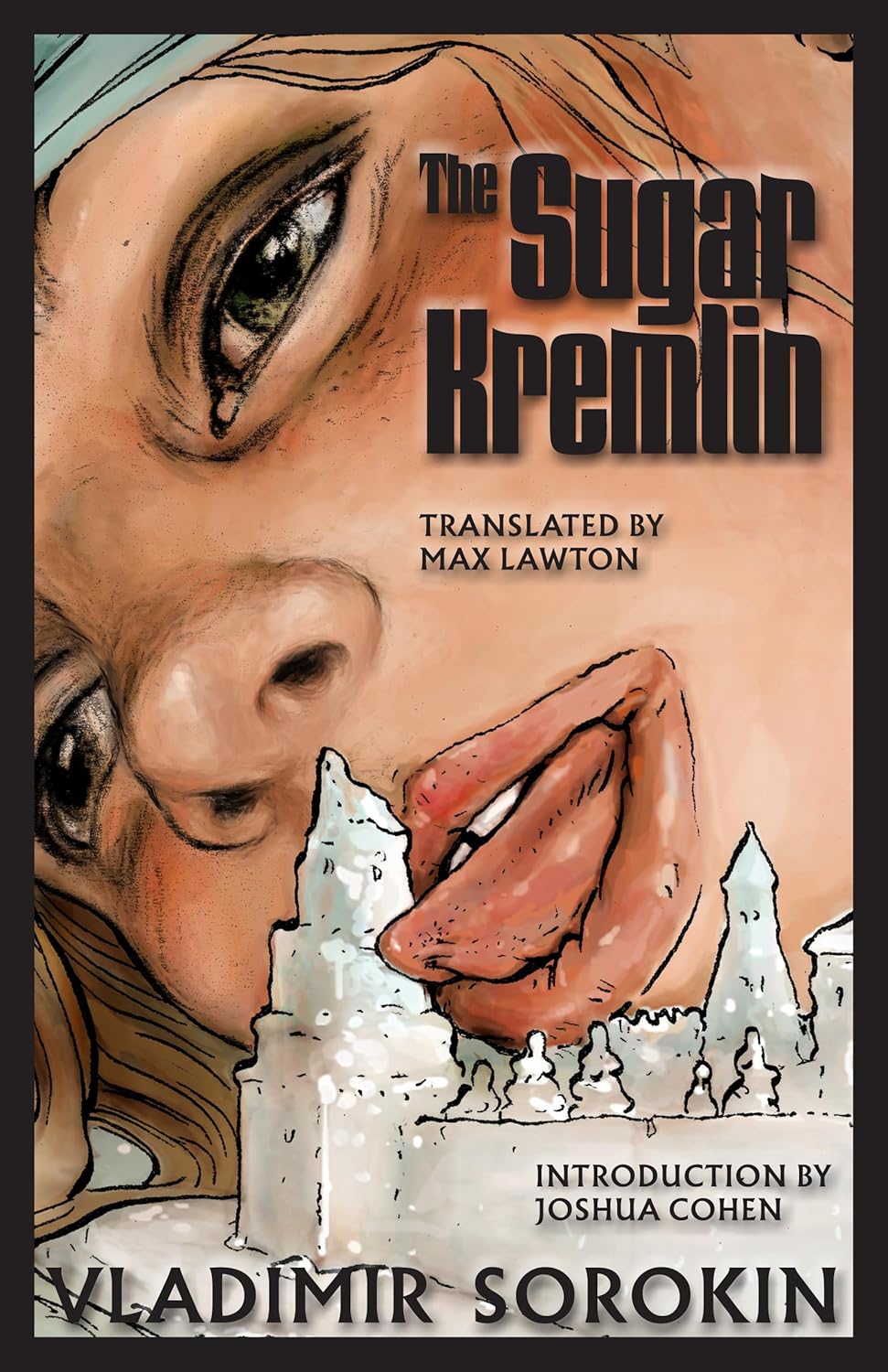
Similarly, in The Sugar Kremlin, the author presents a somewhat transparent veil to the reader who is meant to see a clearer picture of the Russia in its pages by virtue of its goofy skewed lenses. His literary imagination marries the wildly outrageous with the solemn plight of oppression. Truth is filtered through absurdity. This is the only sort of absurdity that works, in my opinion, that is, absurdity without randomness. There is some randomness in his books, but it is used to throw the reader off, for comedic effect.
Joshua Cohen provides a low-effort, slightly standoffish interview, and the translator provides an eerie experience alongside the author in Russia in his Coda. The Coda and interview hint that the author is operating out of a long tradition of critical fiction, while hazily inhabiting an unaccountable borderland. These pieces bookend a novel which might appear at first inexplicable for its side effects and sideline characters. The short segments that compose it cannot stand as simple short stories but must be unified by a vision of people interacting with Kremlins. Multiple layers of Kremlins, dictating and coating their somewhat rotten lives. Like Sorokin’s writing, sweetness only masks horror for characters who partake in the free sugar. There is no nutritional value, yet people love it, are seduced by it, by sugary architecture, flimsy representations of government authority. They lap it up.
Tangential sequences of perversion and compassion and atypical interactions are characteristic of the author’s other works. There are elements of horror, erotica, comedy, satire. It suffers from the common science fiction misalignment of years. The setting is 2028, but the technology has progressed in unusual ways, missing the mark of where we will be two years from now. I have not read Day of the Oprichnik yet, though I still got along with this novel, which is apparently a sequel. I don’t think it matters in what order a reader encounters the books of Sorokin. They lend themselves to a gradual, piecemeal digestion of his themes and style. The conversations are varied, and unexpectedly long, plumbing the mundane lives of quirky people scraping by at the bottom rungs of street life, within a bordello, prison, or lower ranks of government office.
Two people seem to fall in love while waiting in line for bread. In another chapter, a prisoner is tortured while probed for information.
This is the second novel by Sorokin I’ve read, and it bore all the marks of his signature humor and irreverence.
He communicates through his peculiar techniques of blatant sarcasm and concerning, heretical abandon.
The sugar kremlins gifted to the populace and torn to pieces by greedy riff-raff and used for different purposes, including sweetening tea, defeating hunger or rubbing on the body.
Cocaine makes many appearances in the book, too similar to sugar to ignore, used as plentifully by some characters. This drug, like the sugar, is another means of control.
The Kremlins transform government power into a confection, into a stimulant, into a child’s toy.
An unwavering book about a possible future we would be wise to dodge. About a past we don’t often acknowledge in such bleak and revealing ways.


Leave a Reply