

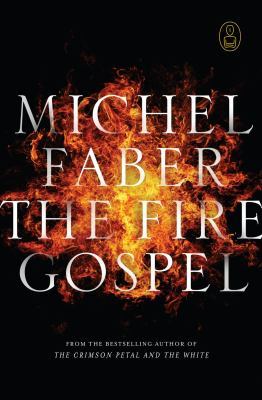
No one will be tempted to say that this is Faber’s best book, I dare claim.
It is a bit flimsy compared to his best books. I’m thinking Book of Strange New Things and Under the Skin and the ones I haven’t yet read.
Aside from the fact that the book was designed to offend, to provoke, to ignite the imagination, it suffers from a lot of the same problems which the book within the book is criticized for.
Our main character is an author who uncovers a new gospel account, publishes it to get rich quick, and suffers the wrath of a society unprepared for such revelations. The reader is likely going to be most interested in reading the said gospel invented by Faber within the pages, which espouses a slightly skewed version of the crucifixion. That part takes up a good 10k words. The rest is just filler in a sense. This same situation happens in the fictional book written by the main character. We get fake Amazon reviews in the book complaining about this problem. He wrote a book of filler to surround the important stuff. It was almost as if Faber unintentionally spoofed his own book. The reader cannot help but be disappointed by all the stuff surrounding the invented document. I think Faber was not terribly impressed with his phony gospel story and decided to make excuses for how terrible it was within the book.
The book is commenting on itself, but the comments only make the book seem worse. The next layer involves the life of the author, who seems like a womanizer, an opportunist, an overnight success who cannot handle pressure.
One issue I find is that the main character is some world-class expert on Aramaic, yet for the sake of irony, Faber makes him a staunch Atheist. What kind of modern day Atheist bothers to learn Aramaic? Especially one who dismisses religion outright, not one interested in the debates and existentialist questions. The main character acts like a hedonist much of the time.
The ending is designed to humble him, though he is unlikely to reform in my opinion. It is rather that he is forced to change his story because society cannot accept a truth he has uncovered. But he is left without a version of truth that makes sense.
The truth is, nonbelievers don’t need to undercut the historical documents of the devout, they need only ignore what is already there. There are already enough scientific theories and apocryphal writings to keep them distracted. The search for faith involves investment in uncovering the arguments put forth by many historians and scientists. But most people would rather choose a side and follow without delving too deeply into the details.
The characters in the book definitely want to be spoonfed a narrative. Contesting authenticity is not their main priority.
The main character does not offer an interesting viewpoint or new ideas. The discussion of the perils and corruption of the publishing industry might have some relevance, though they felt dated to me. The book would’ve been served better with a more balanced view of the topics it touches on. Getting more character viewpoints would’ve helped. Or giving the protagonist more historical knowledge, more reason for holding his cherished beliefs. His only motivation was to get rich and famous.
In short, more effort should’ve been put into this novel. It’s a thriller that might remind some readers of Dan Brown, but it’s about as long as the average novella.
 L. S. Popovich
Leave a comment