
Reveals more on my 2nd reading.
The audiobook version performed by the inimitable Colin Ferrell is unforgettable.
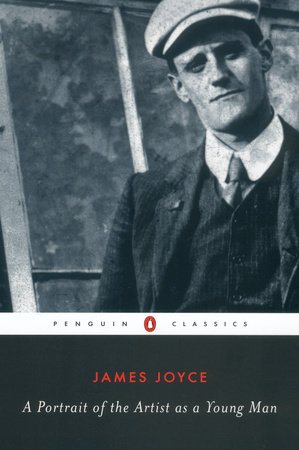
This is a tremendously aesthetic account which delivers on the promise of its title. One might accurately enlarge the title to: A Moving Portrait of the Sensitive Artist as a Troubled Young Man. This gives us a better idea of what we will encounter. We can Subtitle it: Who Comes of Age and Into his Own After he Throws off the Yoke of family, Country and Religion.
The novel begins with some babble about a moo cow. The author recounts, remembers, transcribes early memories. The memories merge into scenes, which develop and accelerate, transport the reader through the various moments of dawning childhood awareness of the external world and the confusing confluence of people and places. Books enter early into Stephen’s life and they remain there, central, influential, resonating.
Some of the most captivating segments take place in Irish Catholic, Jesuit-run institutions for young kids and then Belvedere College. His family members become tangential characters. His schoolmates take center stage. Much of the action is advanced through witty dialogue. Too often, Stephen is disturbed by something his comrades say. Their irreverence bothers him. Stephen is deeply religious. And it is only through forsaking his obvious calling to the priesthood that he encounters his truer joy in writing, as we see from his illuminating journal entries which close the book.
Along the way, he sins, repents, sins, repents, castigates others and is reproved in turn. His grows, achingly toward a purity of expression, an idealistic embodiment of his artistic vision. This subtle transition from angry, rebellious youth to cool-headed cynic is handled brilliantly. The prose is sinuous, unapproachable, containing immense depths of imagery and exquisite form. Joyce is a resounding maestro of English usage. Mingled here are snippets in Latin, and hints of dialectic idioms. There are countless references to other authors, poets, and dramatists, whom Joyce admired. The reader receives tastes of what is to come from the author in the later stages of his career. One might be so impressed by his sentences, and his dark and universal themes, that if he had never written his two subsequent books, this could rightly be called a magnum opus, or a quiet masterpiece. But somehow, it cannot even compare to the two monumental achievements which followed. Without a shadow of a doubt, Joyce accomplished his mission, after setting out with this semi-autobiographical bildungsroman, to “forge in the smithy of [his] soul the uncreated conscious of his race.”
With Ulysses and Finnegans Wake, Joyce elevated the novel to the heavens, covering the totality of human experience in a way which only Dante and Shakespeare had managed before him.
This is apparently a later version of the novel called Stephen Hero, which is more of a curiosity, along with his tiny collection of poems, a play and the other classic short story collection Dubliners. His oeuvre consists of the 4 main full-length chief works already mentioned, while the rest is merely a series of footnotes.
Taken together the 4 books are perhaps unequaled in all of literature for their inexhaustible treasures.
My favorite part is the hellfire and brimstone rant, which goes on for a long time, and which perfectly encapsulates the trembling fear and hopelessness of a harsh and devastating religious upbringing.


Leave a Reply