
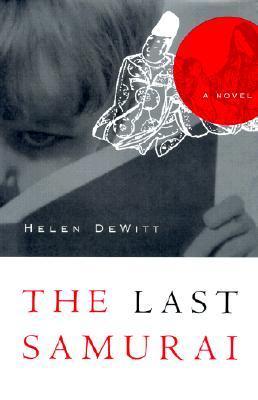
A mostly astute novel about family.
They ways it doesn’t exist sometimes. A heady intellectual foray into literary and language studies, with sprinklings of cinema, science and history.
Lofty storytelling methods employed for dense comedic scenes, sustained by the awkwardness of an uber-intellectual having standoffs with strangers on the train about silly and pretentiously specific subjects no one has any reason to obsess over, except that the first main character, Sybilla, is an escapist and the second main character, Ludo, is an idealist – mostly because he hasn’t lived. They both grow up in a shell of books. Seven Samurai plays in the background for the whole novel, constantly interrupting the scenes and chapter headings.
Ludo saps up knowledge like a superabsorbant polymer (often found in diapers).
The extraneous interpolations are true to character but possessed of that strained quality one feels when one is at a gathering and one person suddenly commands everyone’s attention to expound for minutes or full pages on some subject no one cares about. For our protagonists, their whole lives are stitched together by trivial facts and abstract theorems. The main plot revolves around their uncertain and solid-state family dynamic, when Ludo ventures out into the world overly prepared, to discover what might be meant by the term ‘father,’ and how this nebulous term might be applied to his circumstances, and how this anomalous entity might define his future. For he has always relied on the guidance of his inattentive and robotic mother to direct his hyperspecific development. His foray into forced early adulthood is all too reminiscent of those bright years of youth where one forsakes the elegiac but unimpressive fields of childhood for the fundamentally unavoidable aggravations and refinements of adulthood, without realizing that no matter how immense your knowledge is or how unimpeachable your social skills are, other people will constantly let you down, will force you to redirect and adjust your self-hood, and thereby change you into something you’re unlikely to be comfortable with.
Helen Dewitt is a talented author who isn’t afraid to push the patience of the reader into absurd swamps of text she might find interesting but which makes you wonder why anyone in their right mind would find them so.
Her novel Lightning Rods is very different. She seems unlikely to write the same kind of novel twice. Her short story collection, novella, and newly released doorstopper are all on my eagerly awaited reading list.


Leave a Reply