
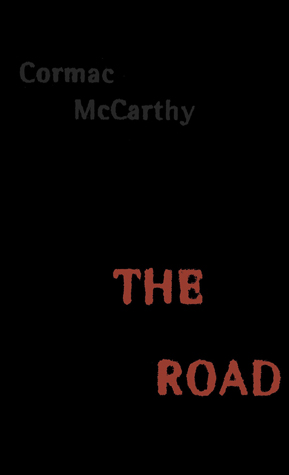
Revisiting this classic left me with mixed feelings.
The first time around, years ago, I was wowed by McCarthy’s language. The second time through, I felt that the narrative was wanting in a few areas.
Most people will be satisfied by the superb prose. For some, that is all that matters.
McCarthy’s other books are better at diversifying the tone and themes, though this is a very representative book. It is probably the easiest to get through. You might follow it up with No Country for Old Men, and then proceed to the denser works.
This is often labeled as a post-apocalyptic novel. In that sense, it falls short of many other such novels in terms of character development and world building.
For instance: they find the coke. It is described as fizzy. Notoriously, cans do not retain carbonation for more than a few months, at most a year. Other parts of the narrative lead us to believe many years have passed since humans returned to savagery. I would think a beta reader would catch this detail. But I imagine the editors were hesitant or forbidden to change a line of McCarthy’s writing.
Another example: They find apples growing and pass through burnt forests and plains. Some plants have survived. They are never able to see the sun, however. The smog or cloud cover is total, as after a meteor impact or volcanic disaster. The boy says “if a crow could fly high enough could it see the sun?” That implies seeing the sun would be a remarkable thing. But 99% of plants simply would not grow without hours of sunlight per day.
The author is very dodgy about hinting at what caused the devastation. It was not his goal to write a traditional s-f novel. He seemed only concerned with the nature of humanity, and with his themes. His characters are often irredeemable, as in the case of the Judge in Blood Meridian. Mainly, they are meant to embody one or more themes. They do not function as traditional characters. They make decisions, but it can be difficult to rationalize such reactions except through the lens of the symbols they represent.
Another for instance: The man discovers multiple troves of canned food and is saved from starvation. Instead of staying put and defending his hoard, he continues on, paranoid that people will come to take what he has appropriated. This makes no sense from a survival standpoint. His irrational behavior is therefore a self-destructive impulse.
“Where men cannot live, gods fare no better.”
Such quotes from The Road encapsulate why it feels so oppressive to read. We are condemned, as a species, to walk a purgatory-like Earth, faring like the nomads within Dante’s circles of Hell. But is it true men “cannot” live there. Perhaps they simply can’t survive due to their own ineptness, their greed, or their inability to grow? The world might’ve been an ideal home, except that we ruined it.
Mccarthy reminds me of Martin Scorsese. Many of McCarthy’s books feel the same like Scorsese’s movies feel the same. You might not confuse them for one another, but they have the same atmosphere, often a similar plot, repeat characters, and the recognizable central message. Edgy and artistic maybe, but a one-trick pony in many respects. The texture of his writing is very good, approaching if not equaling Hemingway’s in certain passages, but there isn’t really much else to adore.
The book is of course, a metaphor for the suckiness of life, the guarantee of suffering, the lack of escape from mortality. There is the repetition of the phrase: “passing the torch.” It means continuing the species in a robotic way, as if the only purpose to life was reproduction and then toughening up the young so it might survive just long enough to reproduce and carry on the DNA. It is terrifying to imagine, or perhaps to know, that the light that is mankind will one day go out. That the universe could become silent, unsentient, and possess no means of understanding itself, perhaps for the rest of all time. That would paint our struggles as a pathetic tragedy. Why did we fight all those wars, why did we consume all the resources on our planet if we were just going to fizzle out into an unpleasant odor at the end? The book dwells with this hopeless attitude for its mercifully short length.
Parallels between Blood Meridian and The Road:
Both have a character who is a child whose innocence dies throughout the book and whose innocence is shown to be a weakness. Both have unnamed characters who travel for loose reasons with no real end goal or plans. Both have hostile worlds where everyone hates everyone. The plots become increasingly disturbing, introducing horror elements such as cannibalism, torture, execution and mutilation. Both are hyper violent and have morally grey characters that become worse as the story unfolds. Both end with the villains (in Meridian The Judge, in The Road, Death) winning and our characters are shown to be incompetent or impotent to stop cruelty from persisting. Cruelty is portrayed as inevitable, a byproduct of our humanity. It is not framed as an inheritance of sin, but rather a fundamental aspect of our DNA.
Both end ambiguously. In B. M., we do not know the fate of the kid. In the Road, we do not know if the family the child finds are “good guys.”
It is a stretch to assume anyone in any of McCarthy’s books could be construed as a “good guy.”
The brutality of mere survival and the way humanity will do anything to live constitute the driving action. I would argue that more nuance could’ve freed the book from a repetitive framework. It would be nice, if an occasional ray of hope found its way through the impenetrable fog as well.
The author’s style is about as poetic as the average reader can tolerate, but in The Road and Blood Meridian, he seemed to have only one thing to say.
The obsession with being the “good guys,” was an interesting conceit of the main characters. You can call yourself a Judge or a hero or a messiah, but if your actions are no better than anyone else’s, or you go by your own moral code, or you put self above all else, then you’re kidding yourself. It is a coping mechanism, believing we are doing the right thing, and a way to justify horrendous acts – for the greater good.
You could argue that the man will do anything for his kid, will self-sacrifice. The kid’s innocence and weakness nearly cost them everything multiple times. The whole sorry affair can be summed up when the man says “everyday is a lie. But you (referring to himself) are dying. That is true.” The only relief left in the world is death.
Which is just depressing to read. He reinforces it on almost every page of the book. The wife kills herself to escape. The father becomes a monster for the sake of survival. The kid kinda wants to die, so persistence only leads to pain and suffering. Is there meaning in it? Ultimately, there is nothing in the book to give their struggle weight other than their relationship, and we know that that must end. But even that relationship pales in comparison to the bond a non-death-striving family might cultivate. If you believe adversity makes those bonds stronger, I don’t buy it. All the broken families I know in real life went through adversity, and most of the bonds were shattered. Some of them can be repaired, but not if everyone is eating one another.
The road in the book from which the author derived his title could lend more meaning to the reading experience. The struggle to keep going. There are a few good interactions in the book and the man succeeds in keeping the boy alive. But the boy is shown as inept for a brutal world and you cannot trust his judgement. The family he joins could be worse than what he came from. He is an outsider after all. If the meaning of life is only to struggle, all else is ash and and a lie and then death is a kindness and the only truth. He plays around with the idea of God, but he’s shown us a world without one, without hope.
Is the book also a metaphor about a man at the end of his life passing knowledge of life to the next generation? If we rely on mortal men’s words to instruct us how to live, then there may be no chance of sustainability. We need books, records, infrastructure in order to move forward as a society. Civilization, as depicted in this book, is long-dead, because the lives of the characters are mere shadows of human potential.
The characters have no time to develop character. They must only focus on hunting and gathering. If that is all they are, have they become animals? In such a state, the means of survival could not be manufactured and the species would die out in a few generations. As written, the inhabitants of the world in The Road no longer farm. They scrounge. That equals slow permadeath.
It is a very loud book. Perhaps not the best beach read.
 L. S. Popovich
Leave a comment