

Squandered Wonder
Elio is a perfect example of why there should be a space between seeing and reviewing a film. I left the theaters thinking I had seen a decent sci-fi palate cleanser after Lightyear. After a day’s contemplation, I realized it is one of my least favorite Pixar movies. However, most people may look past the problems that brought this movie down from its potential.
Elio is a Pixar original sci-fi tale. Our main character, Elio, is struggling to find a sense of belonging after his parent’s death. They contracted Disneyitis. He feels so disconnected from people on Earth that he longs to be abducted by aliens, believing extraterrestrials will offer him the love and affection he craves. How he came by this notion is not explained. His aunt works for a Top Secret government installation and apparently routinely brings him to work where he is left unattended within sight of extremely expensive-looking equipment.
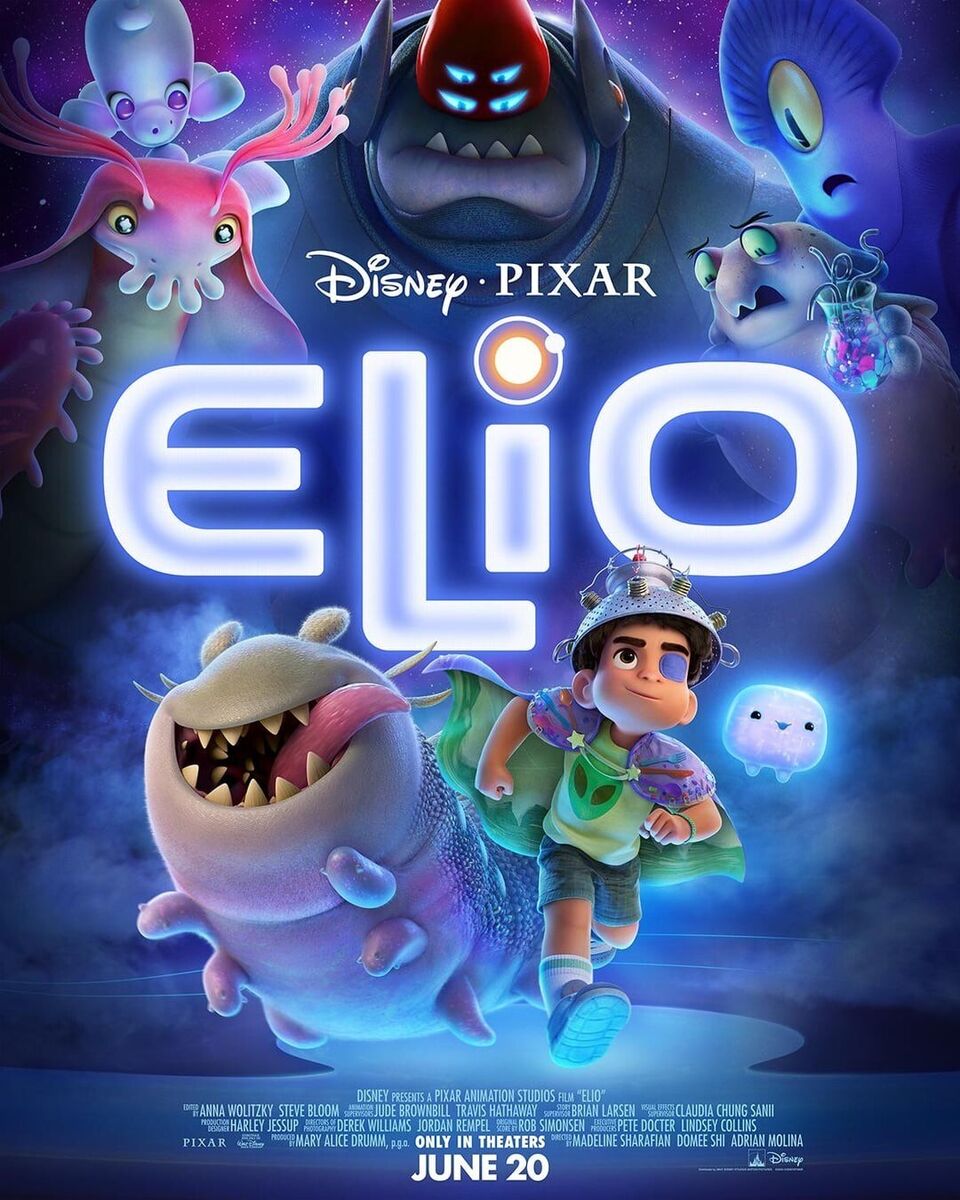
The universe answers his prayers, and he is abducted by the happy-go-lucky aliens of the communiverse, a peaceful community that share knowledge and technological marvels, in a vibrant spherical mothership designed like a McDonald’s playground. However, if Elio wishes to stay among the stars, he’ll need to thwart an alien warlord attempting to take the communiverse by force. Because he’s totally Earth’s leader.
The premise is simple enough, and many youngsters will connect with Elio’s journey of gaining acceptance from the ones near at hand rather than seeking comfort from a vast unreachable void. A few scenes are memorable. One in particular had many in the audience chuckling. Glordon, Elio’s main alien bff, is probably the best part of the film. He’s a giant silkworm with a maw of razor teeth, rendered cute and endearing through excellent animation choices and characterization. His struggles mirror Elio’s—he’d prefer to avoid inheriting the warmongering duties his species and lineage demand. The film should’ve been about Glordon. Watching his relationship with his father unfold made for the emotional heart of the film. His species spins silk and requires high-temperatures, which play into the plot, such as it is.
Everything else about the film doesn’t work, including the focus, Elio, and his non-relationship with his aunt. The film went through various rewrites, directors and directions, and it shows. Nothing congeals if you think about it beyond the surface level. The communiverse can literally bend space, matter and time to their will, as shown when they abduct Elio. So why is a warlord a threat? How are they oblivious enough to think Elio is an ambassador from Earth? After scanning him with a hyper-advanced computer, they couldn’t figure out he was a child. Gravity, distance, energy, universal knowledge—none of these are limiting factors. In fact, they can travel lightyears, but it takes minutes to navigate the immediate debris field surrounding Earth when the plot requires tension. More world-building would have impeded the character journey and slowed the film down, so the filmmakers cobbled together what they could manage, what seemed passable at first glance.
A bigger problem than the world building and consistency is the animation and design work. Pixar has gotten so good at realistic backgrounds that the cartoonish humans look alien in their own world. Multiple times, a character was in silhouette and the flat design of the side of their face was jarring and off-putting, worthy of a jump scare. Wall-e had similar problems between the realistic animation of the titular character and the oafish humans, but the stylized world and unexpected story were enough to forgive the mismatch. Pixar needs to up the ante with the stylized visuals.
The remaining aliens were poorly conceived, apart from Glordon’s well-thought-out race. There was seemingly no thought to function and how the aliens survived, worked, and interacted. A holographic universal translator ensured they could always add their two cents to the situation. Their designs feel like personified random objects and animals (a jellyfish, a rock, another fish), taking cues from modern Pokemon.
The biggest failure to launch was the film’s direction. It unfortunately suffered from whatever leprous plague had reduced Wish to a desiccated husk, bereft of sense, joy, or wonder. The film felt lifeless, regardless of the ecstatic splashes of color and erratic jump cuts. A failure to understand the rule of thirds—avoid constantly placing the subject in the center of the screen because it’s boring—caused this. Elio has none of the style or visual flair of modern animated classics like the Puss in Boots: Last Wish or Mitchells vs the Machines. It plops its focus in the center and never thinks about unique facets of film, how placement, color, shape, size and consistency on that screen tell the story as much as the plot.
I fear the Pixar I once loved might have gone the way of The Good Dinosaur. The heart of this movie is a gooey core of cheesy shlock. Yes, there’s a crescendo moment that will pull on whatever heartstrings you have left, but it doesn’t belong to the main character, making me wonder why Elio is the center of the film.
The movie starts with a set-up juicy for emotional power and character development. The only person he has left in the world is his aunt Olga, who doesn’t connect with him in the way his parents did. Yet, the film never addresses Elio’s loss, and barely touches on his grief—focusing instead on paint-by-numbers bullies. We know little about the home relationship, and about his life beyond his immediate adoption. Old Pixar would never glazed over this story beat. Movies like Coco, Soul and the Toy Story head squarely into the discomfort of hard topics. When I can say Riley’s crisis after moving felt more emotionally impactful than the loss of Elio’s parents, Old Pixar might be a Hailey comet we might never see again in our lifetime.
For a studio that explored the pain of loss in Up, the existential crisis of reconciling the past with the present in The Incredibles, and the challenges of parenting after losing a spouse in Finding Nemo, Elio’s emotional kiddie pool is the glaring takeaway from this film.
I don’t think history or the box office will look kindly on Elio. Those who like it, I fear, will forget it in T-minus three months. But if you’re not the type to overanalyze what you’re watching, you’ll probably find enjoyment in the straightforward jokes and ripe color palette. My recommendation would be to rewatch Wall-e, Monsters, Inc and Toy Story and remember what Pixar once was capable of.
 L. S. Popovich
Leave a comment