
A collection of eccentric tales.
The author has also released a novella and a nonfiction book. With this publication, he gathers a few pieces previously published in Neo-Decadent Anthologies, along with 14 previously unpublished stories. I think the best of the lot is “Hellenic Dropout.” This is probably not the best place to start if you are new to Neo-Decadent writing – just read the anthologies first. The author has a way with words which is immediately recognizable. A very harsh outlook on the world. I’m sensing a disdain for modernity here.
Though the collection was quite enjoyable, I may need to revisit some of the tales. On occasion it was difficult to determine what the author was going for in a given scene. The tones were not uniform, as I would expect from a book purporting to belong to the relatively young genre of Neo-Decadence, which, as it evolves, tends to resist definition. Every scene here was surprising and had a discernible punk attitude in my opinion. None of the characters were likable, but I do not require literary characters to be likable. I found some of them relatable. The majority of them were young. Two stories toward the end: “Fluora” and “Poets Die,” employed a quieter color palette and took place within healthcare institutions. In this way they reminded me of the impressionistic books of Luke Delin.
You get a lot of variety in this collection.
“Zhuangzi in Chrysalis” was more of a formal experiment than a story. A ‘what if’ scenario. While the whole ‘butterfly dreaming it was human’ concept has been overused in literature, the author rechristens the concept with a unique perspective.
“Cooking Australia” was very good. Catering to Neo-Decadent absurdities. Roping in abstruse vocab and elaborate visuals. Meshing a quirky setting with poetic verve.
“The First Masterpiece of the Marquis de Sade,” was a brutally interesting story. While I believe it is a stretch to call anything written by de Sade a masterpiece, this story posits the development of such a beastly individual as an aesthetic masterpiece of Nature, who, through the cultivation of animalistic desires, was able to refine his uber-decadent art to an unapproachable level. In the end though, it revels in a pre-teen’s discovery of sexuality, which clearly bleeds into other tales in this collection.
Similarly, “Baron Munchausen’s Suicide,” is a bitter, cruel take on the goofy historical character’s quixotic madness. Spoofing and groping toward some philosophical catharsis, the story only succeeds in rendering entertaining the morbid behavior of a mentally ill aristocrat. It’s funny in an old-fashioned way, like the film Freaks, I suppose.
“Pheromone Literature,” was magnificent. An imaginative futuristic tale of metamorphosed language. An examination of alien consciousness. A castigation of human pride amid the bleak and unforgiving sophistication of the universe.
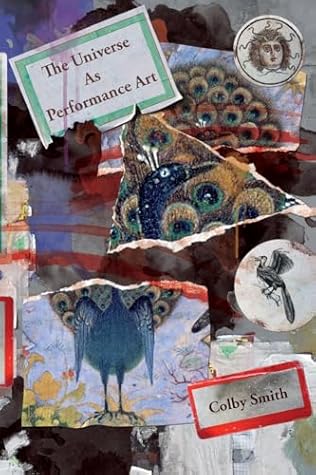
“The Universe as Performance Art,” takes the form of a list, almost like a 2nd Table of Contents. It was beyond me to discern a story here. But it contained poetic rigor. It resembled certain examples of performance art I’ve seen, which often strive to torture meaning out of abstract movement and ultimately pointless actions. But it could be that things like interpretive dance and free association word games are too out-there for my aesthetic antennae to perceive.
“Amaterasu Overthrown” and “Somnii Draconis,” were impressive. The latter revisits a theme from his book The Ironic Skeletons of extracting fossilized specimens and drawing deep conclusions about Time’s unsubtle indifference to humanity’s struggle. Art is a sort of pity party humanity throws itself every hour of every day if you ask me. “Amaterasu” contemplates a sci-fi scenario mixing far-future tech with mythological figures. It would be cool to see this world expanded into a full-length novel.
“The Game Show Expats,” was a memorable story about a family experiencing Florida. It is unexplainably gruesome. The descriptions are beautifully delineated but again, the characters’ behavior defy reason.
“A Fable of Salmon,” is another tale of awakening sexuality. It is more down-to-earth than the other works here, but ends in a Lovecraftian explosion of unjustified cinematic grotesquerie. I was reminded of Bizarro-fiction. The long section of dialogue was puerile and unnecessary, but I remember the feeling of going to a party as a high school student with ridiculous expectations and moving through the stages of boredom and then ultimate terror at the sight of unsupervised teens, who instantly annihilated the interiorized concepts of morality I had built up over one and a half decades.
Also included are “The Revelation,” “Romulus Craved His Mother’s Milk,” “The Bombed Zoo,” and “Aphorisms in Concrete.”
I was reminded of David Rix by the latter. It is a mature story about a strained relationship, about defining oneself by art and accomplishment. Rix and other Neo-Decadent purveyors often frame their works by circling the topic of artistic expression. The characters seem to be outsiders grasping at straws of meaning through profound pronouncements, often concocting ambitious plans that are rarely actualized. There is always the temptation to succumb to producing commercial art, and every self-respecting artist must either prostitute themselves in some way or be dashed against the granite cliffs of public obscurity.
The author lists or thanks dozens of Neo-Decadent adjacent authors in his acknowledgments page. If you have read this far you are probably interested in the amorphous genre I’ve struggled to describe in this review. Like Surrealism or Cubism, Neo-Decadent art distorts reality, forces the reader to reevaluate the perceptions of our jaded nervous systems, seeking to stimulate the overstimulated. By marrying the profane and the profound, these artists pave an uncommon path through the decaying underbelly of contemporary literature.
 L. S. Popovich
Leave a comment