
Sui generis.
Books about bibliophiles ring too true for me. I dream of books, bathe in books, eat books without condiments, I drink books black, without cream sugar or a wedge of lemon, I take them straight, not watered down. I burn only abridged editions. I store books in my car, my shoes, my closet, under the bed, in the bed, between the couch cushions, and even within my own body. So I identify with the book-crazed narrator of this story. Books are an escape, and a gateway leading out of the labyrinth of loneliness, leading only to a more complex loneliness.
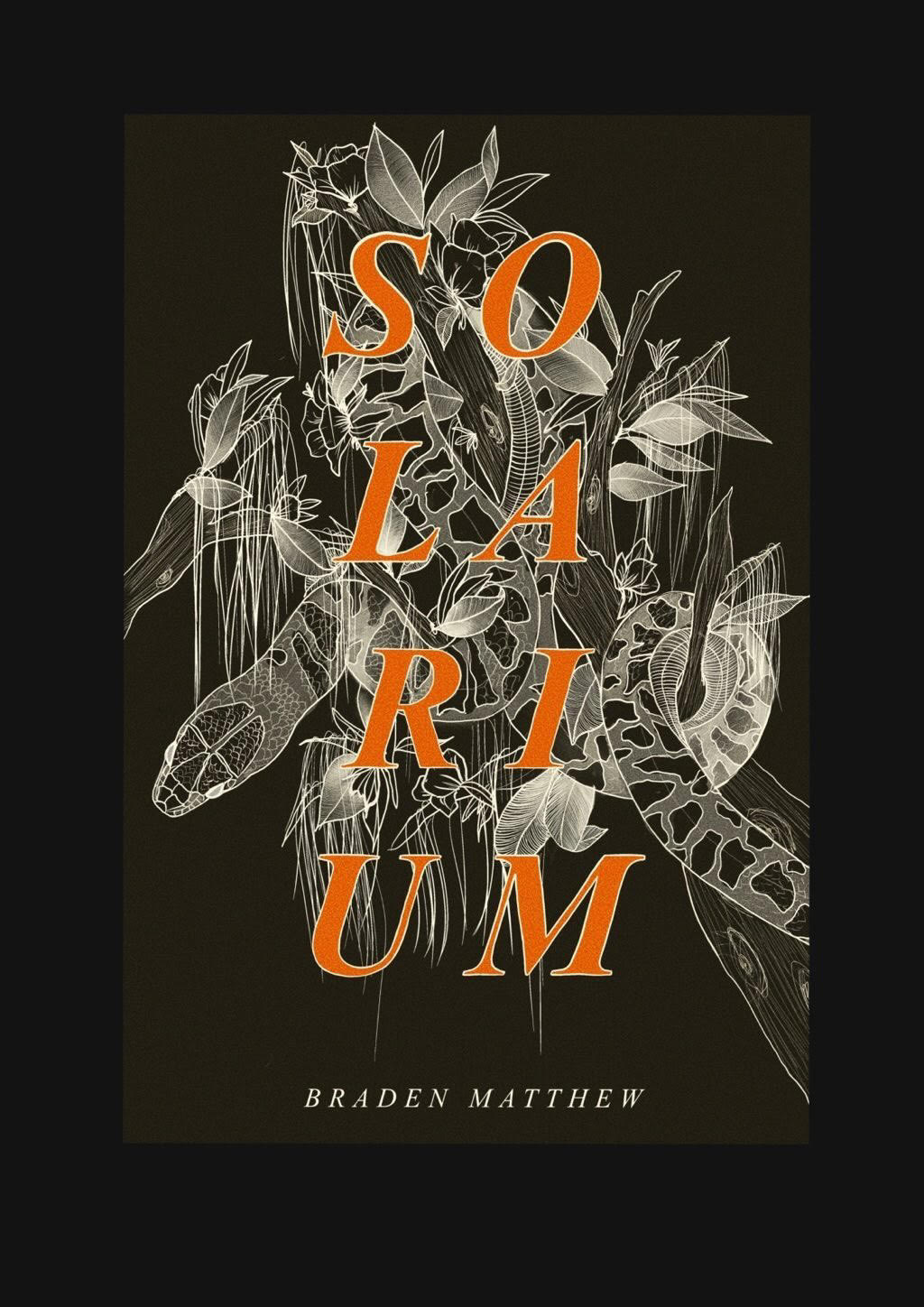
This novel posits, in a variety of forms and through a myriad of methods, what literature means in the modern age. He ropes in a wide-ranging deep-dive into racial politics, the role of technology, and the depiction of a tyrannical family life. There are uncertain questions about religion left up in the air. But this is not a novel with easy answers. One must excavate certain substrata, which is not to say that the surface layer plot is not interesting. It is unpredictable. The strange absence of ebooks pervades a dystopian, post-Fahrenheit-451 world, where Netflix, I mean The Human Theatre has taken over society’s collective unconscious.
I was a little confused about the character named Paprika, who was a very liberal girlfriend, who simply disappears and reappears. She does not seem to count toward the narrator’s loneliness quota. How could someone so anti-social as Bib end up with such a rocking hot GF who is totally down for anything physical? I felt that it could have been explained. Maybe they shared a love of books and philosophy. But her character seemed a bit like a convenience. Though her contributions to the discussion were interesting. When Bib suffers from muteness, how did he meet such a soul mate, and why does he let her vanish from his life without so much as an acknowledgement of her absence?
This is not the first time I have read about humanity disappearing into a virtual world of their own making. The way this is contrasted with reading is thought-provoking.
There were too many typos in this book, so I wish there would have been one more passthrough to catch them.
In terms of editing, it could have been tighter. There were many scenes which provided a nice rhythm or even a shock to the reader’s sensibilities, but the chronology was muddled, or at least unclear in a few parts. I am thinking of the character Abdullah (or however it was spelled), and how he seemed like a latent homosexualized friend, and I don’t think I am reading into it because there is talk of love toward the last pages of the book between them. And their connection to Feeds Mobs, or the inventor of the Human Theatre. What, exactly, were they trying to accomplish going into his taxidermy headquarters and carrying around a decapitated bat? The scene was stirring, psychedelic, but also seemingly random.
I loved certain parts of the book enough to let most of the inconsistencies slide by. You have to remember that this is a disaffected, unreliable narrator, who is so immersed in books I would not be surprised if reality were ultimately meaningless to him. The Society of Bibliophiles was an interesting addition, contributing a layer of metafiction and letting in a fresh breeze of worldbuilding. Finally, the blind librarian and the despotic father, while emotionally resonant, were ultimately mouthpieces for the authors interests in philosophy, race, family, and religion. The diatribes were pretty entertaining, and the sentence level craft was excellent, barring a few hiccups where a missing word or extra word marred an otherwise superb sentence.
I would love to read more by the author. He is not a slave to form or cliché like many debut authors. He seeks after the imaginative diction and the hidden texture of language to provide a titillating and ultimately enjoyable experience for the reader. Sacrificing character development for an in-your-face account of flawed characters speaking their mind, and leaving enough open-ended questions floating in the reader’s blasted psyche to keep them thinking about it long after the final page.
 L. S. Popovich
Leave a comment