
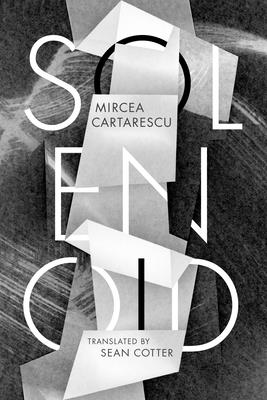
A depiction of the remarkable wealth of one man’s inner life amid the bodily poverty and blindingly dull inheritance of the paltry years allotted to him on a damaged and ravaged earth in a squalid and unforgiving metropolis. Drenched in cosmic surrealism and accoutered with interlocking symbols.
The author pursues central questions and then intersperses scenes from childhood and adulthood in alternating sequences. We see through the nameless semi-autobiographical protagonist’s eyes how creative exercises represent escape and salvation and how other people often baffle and astounded, while ultimately offering little comfort or validation. We are led to believe we are following the travails of a god in a mite’s body. Bodily decay and mental acuity are two aspects of the main character endlessly explored in morphing contours of imagery. He contemplates the infinities contained within us to comprehend the jigsaw pieces of the universe but claims there is neither the time nor the strength to meaningfully change anything in this wheel of existence.
So he takes refuge in the solitary pleasure of reading and discovering new worlds through language. This is a theme as old as time but is the theme of Cărtărescu’s life from him. The incommunicable dreams and thoughts of our inner lives consume the greater part of our energy. Cultivating inner totalities may be the only way to cope with a hideous world. These are some of the answers the author posts.
Meanwhile, he contracts a phobia of dentist chairs, which are transmogrified into pain extraction devices, sucking, gurgling, grinding torture mechanisms, which in turn become stand-ins for a society built upon menial work, set against the childhood wonder and the majesty of the natural world like a stain in a pristine masterpiece. His fascinations with butterflies and caverns manifest in several ways, recurring in the bones of the human body-some of which are shaped like butterflies, and the vacuous spaces therein, and the translucent flesh sacs that are our organs. He conjures attics of the mind, carving out gray matter and stuffing the spaces with secluded wonders, libraries of babel. Through the medium of his diary he wanders through mental abysses and ascends toward the lofty Dantean peaks. From those endless pages he has promised us in his interviews, he filters the world through the senses, through the dream-harrowed mind, copying them out and smudging the boundaries between experience and invention. He combines this with the pursuit of science and an appreciation of sexual pleasure and their peculiar perceived connection to the soul. Galaxies intermingle in their reveries with drooling cityscapes, Eastern European hubs the ghost architectures of which come equipped with translucent walls like some teeming superorganism.
The slide into surreal dimensions is drastic, and results in the perception of other realities. In many ways, imagination and perception become inextricable. The Voynich manuscript makes an appearance, finding its analogue in the recognition of the impossibility of reading meaning into the chaotic universe, or of deciphering the DNA of our behavior or the purpose of human life. We drift in self-created heavens and hells. He is visited by madness, suicide, and medication in his study of famous minds, depicting many descents into institutionalization and orphanhood.
Bucharest rises like a rabid beast, faceted with Gothic precision. He incorporates Gaia theory and points out all of the shameful preponderances of our race. He circles back to the solenoid, a magical device in his room, which allows him to hover above the bed, facilitating heightened dream states. In some places he regards technology as occult magic, even going on a long tangent about enchanted glassware, and Tesla coils all the while marrying his readable style of him with an ornate vocabulary. He expresses a contempt for the study of lepidoptera but seems to have delved in it himself and adorns his literary masterpieces with insectoid daydreams.
We are introduced to his teaching life, and the separate existence of his writing, when like Pessoa, he documents the mundane abstractions of a tortured, brilliant mind with nothing to occupy itself. The art of writing for art’s sake propels him forward. We witness marital death, the impediments of a Philistine populace, and the hinderances of the body. He experiences the angst of a man with intellectual proclivities swallowed by a backward civilization. There is no end to his conjuring of desolate landscapes, inescapable torments, and Lovecraftian visions of parallel irrealities.
Toward the end we meet the figure of Palamar, who introduces our narrator to the study of mites, their fascinating preponderance, and their strange multifariousness, which branches into the examination of the symbiosis of all living things, parasitism, the nightmarish aspects of the microscopic world, and the gigantism of the universe. The atomic and quantum realms are contrasted with cosmic imagery, and spiritual versus the physical attributes are dissected. The stark difference of his 2 marriages seem like further examples of the weird and unpredictable fates waiting like unopened doors in the mansions of our lives.
The question of whether you’d save the masterpiece or the infant from the burning building is repeated like a refrain. The times when the flipped coin is neither heads nor tails but lands on its edge is another obsessive possibility which keeps him in thrall. Any instance of slipping through the cracks of the universal laws interests and consumes it. Do you ever detect the presence of higher-dimensional beings, or spin off into Dalian reveries? Do your inner landscapes resemble Boschian panoplies? Then you’ll be at home in Cărtărescu’s freewheeling imagination, slathering every page with rich, dense circuitries of flesh and machine, like Cronenberg behind the camera, the paramour of Romanian literature contains the symphonies of the spheres in a visual feast of interior experience. We are left with spirit and body, the dualities of human experience. We can only be awed by the diversity of forms in the animal kingdoms, the majesty of anatomies, and the opposing forces of interior and exterior.
Finally, you must choose your master: There are only 2 fears: the fear of god and the fear of man. If you fear one you do not fear the other.
This is more than a dream diary, more than an autobiography. It is another life you might live vicariously. An unforgettable one.
 L. S. Popovich
Leave a comment